Saturday, May 3, 2014

"Her"


The not-too-distant future depicted in Spike Jonze’s “Her” is, much like the life of his protagonist, a gilded cage. Its world, from the pristine architecture to the pastel-coloured interior design, is as pretty and elegant as a brand-new Ipod; and in spite of the ostensibly warm colours used to film it, just as cold and artificial. There are relatively few exterior scenes, and even fewer wide shots and short focals. The majority of the film’s shots revolve around Joaquin Phoenix’s face or torso. He is Theodore Twombly, a sad and lonely man undergoing a divorce with his wife Catherine (Rooney Mara). The divorce is made all the more painful by the fact that he clearly still loves her and is struggling to understand how he destroyed such a beautiful and lasting relationship. Emotionally shut off, the only people with whom he communicates regularly are his best friend Amy (Amy Adams, continuing Spike Jonze’s trend of trying to make glamorous women look more “ordinary” by giving them plain hairstyles) and her husband Charles (Matt Letscher).
 

Ironically, in spite of his difficulty to handle relationships of his own, Theodore is very adept at understanding and helping those of other people, as evidenced by his job as a ghost-writer of letters between loved ones. While his prose indicates great sensitivity, the very existence of such a job makes the future depicted in the film even more frightening. It suggests a growing inability among humans to speak from their hearts to those who matter to them, without resorting to help from an unknown third party. It is sad, but also keeping in theme with the film’s theme of depersonalization.

Amy and Charles appear very happily married and eager to help Theodore fill the void in his life. In his own attempt to do so, Theodore purchases a sentient OS system with a female personality (Scarlett Johansson). The first action she takes after her “birth” is to name herself Samantha, for the very human reason that she just liked the sound of it. On the surface, Samantha appears to be a hetero/bisexual male power fantasy: An artificial female computer program with the voice of Scarlett Johansson, designed to meet her male owner’s every needs, working simultaneously as a secretary, confidante and eventually lover. The only thing that’s missing is a body for the male owner to gaze at and touch. And that is one of the keys to both Samantha and Theodore’s relationship and Samantha’s growth as a character. 
 

Because she cannot be seen or touched, Theodore interacts with her in a way that frees him from the awkwardness and challenges that come with interacting with flesh-and-blood beings. No touching, no eye contact, only a voice. She would be a good companion for an autistic person – which, I suppose, Theodore might be. It liberates him and allows him to speak freely with her, in a way he simply does not allow to himself when in presence of fellow human beings. He treats her not as a servant but as a best friend, with dreams and desires of her own.


This is where the brilliance of Scarlett Johansson’s performance needs to be appreciated. Programmed to learn and evolve to better suit her tasks, Samantha has an unquenchable thirst for knowledge and discovery, and is capable of storing and handling quasi-limitless amount of data simultaneously in a mere second. Most of what she sees and experiences, she sees and experiences for the very first time. In terms of age, she is an infant yet her processing and analyzing of data, as well as her emotional responses to it, are most definitely adult. She loves Theodore naturally, illogically, but envies his humanity. She has no body, no nerves to be aroused with, yet her arousal when she and Theodore engage in cybersex for the first time is disarmingly sincere. Her immaterial nature allows her to be in multiple places at once and see and know things no single human could feel but she wishes she had a body of her own, so that he could touch her and make her feel the exact physical sensations he feels. The way Scarlett Johansson conveys all these complicated and so-very human feelings as experienced by an artificial non-corporeal entity is not only a testament to the underappreciated art of voice acting, it also suggests an intelligent and perceptive human being.

Though Samantha’s growth as a character constitutes the strongest aspect of Jonze’s screenplay, the film does not always seize full advantage of its potential and can be at times frustrating in its repetition of romantic comedy structures: Happy times musical montages, fractures in the couple based on a third party’s comment, reconciliation with help of a supportive best friend… These resorts to familiarity in what is otherwise a very human film, aside from making the characters' liberation from the genre's codes more difficult, stagnate its exploration of the challenges posed to romantic relationships by technology and its increase of the blurring of the line between artificiality and reality.

The best moments in “Her” are the most uncomfortable ones, in which the constant struggle humans experience in communicating with each other is made all the more obvious in a digital world: Theodore’s lunch with his freshly-divorced wife; his interactions with his coworker Paul (Chris Pratt) who may or may not be hitting on him; his blind date with Amelia (Olivia Wilde) that starts off very well but ends disastrously when Theodore makes his inability to commit clear… But the best of these is undoubtedly the heartbreaking sequence in which Samantha, sensing Theodore’s doubts about the reality of their relationship, hires a sex surrogate named Isabella (Portia Doubleday, dubbed by French singer Soko) in a wince-inducing attempt at imitating the inimitable chemistry that exists in sexual situations between two people who love each other.


As Theodore Twombly, Joaquin Phoenix continues to demonstrate why he is the best American actor of his generation. With his cumbersome glasses, unbecoming moustache and beltless trousers, Theodore resembles the kind of nerd stereotype that was already dated in the 1990s but Phoenix's mumbles, tired eyes and complete commitment transcend any possible artifices to imbue him with deep, undeniable humanity. There is not a moment where he is not Theodore, not a moment where he makes any conscious attempt to impress the audience. Every gesture, every glance is natural, appropriate considering the entire film questions the reality of feelings, not just in Theodore and Samantha’s relationship but in all relationships. “Her” is a film made by someone who has clearly learned hard lessons in his own past relationships and, like Theodore, has used them to gain a better understanding of himself. I am glad he shared them with us, in the form of an imperfect but valuable and intelligent film.

Thursday, April 17, 2014

"Manic"


Mental illness and disability is a fairly popular subject for filmmakers and actors alike. The serious and dedicated will seize the opportunity to examine people whom most of us find naturally fascinating due to their ostentatious otherness. From then on, different goals and different outcomes may ensue:  Some may attempt to seek – but not necessarily succeed –an understanding of them as human beings. Others, such as John Cassavetes in his masterpiece “A Woman Under The Influence”, may instead use them as a medium through which to talk about and perhaps better understand themselves. Others still, such as Milos Forman in “One Flew Over A Cuckoo’s Nest”, may use them as an allegory for the oppression of individuality.


Unserious hacks, on the other hand, will simply exploit the topic as bait for critical praise and awards by aggressively tugging at the audience’s heartstrings and starring Magical Mentally Ill People in the lead role, saintly martyrs of society’s cruelty and intolerance who teach other characters the true values of life.

Mercifully, Jordan Melamed’s “Manic” avoids the latter tropes but its self-consciously scrupulous efforts to convey what life is like for these people place it in an uncomfortable position between quality and mediocrity. Melamed’s attempts to reproduce the impression of “real life” through heavy cuts and close shots filmed in long focal lenses using a handheld digital camera come across as self-conscious rather than natural. After a few well-directed scenes of the characters talking or having a breakdown, sentiment creeps back in the form of “liberating” group activity – trashing the main room to a Rage Against The Machine song – whose desired effect of spontaneity is undone by the obviousness of its efforts and dramatic dubiousness. The script offers characters with tremendous potential and an evident desire to look at them as human beings but it only seldom gets to see beyond the two-dimensional tropes they constitute, whether they’re Joseph Gordon-Levitt’s troubled angry youth or Zooey Deschanel’s depressive rape victim.

  
Indeed, most of the success in making those mentally ill teens convincing comes from the actors rather than the screenplay itself. I understand many of them, such as Sara Rivas, were actual patients being treated for depression. Their dialogue, while not always especially original, generally comes across as suitably authentic. Joseph Gordon-Levitt, who would later deliver an even more outstanding portrayal of an even more disturbed young man in Gregg Araki’s “Mysterious Skin”, avoids every mistake Melamed makes, never giving the impression of consciously trying to be accurate. He is, as always, a joy to behold and one of the main reasons to recommend this film. His protagonist Lyle Jensen, institutionalized after almost beating a boy to death with a baseball bat, is a potboiler of incandescent rage, not immediately obvious but always lurking within the background of his eyes. Credit must also be given to Cody Lightning for his modest, non-judgmental and sensitive portrayal of Kenny, a remorseful 12 year-old molester of other children and himself the victim of sexual abuse at the hands of his stepfather. Regretfully, perhaps out of discomfort and uncertainty in how to handle an extremely difficult and taboo subject, his interactions with Lyle are not explored as further as they could and should be.


The most interesting character, surprisingly, is not him however but rather Don Cheadle’s Doctor David Monroe, the psychiatrist in charge of their group therapy. Whenever put in the spotlight, many movie psychiatrists – Judd Hirsch in “Ordinary People” and Robin Williams in “Good Will Hunting” come to mind – are drearily predictable, dogged in their often unorthodox attempts to reach out to their troubled patients until they make a break through and give an inspiring speech or two after which we the audience know things will turn out better for them. Doctor Monroe, however, has issues of his own: He’s frustrated, unsure of his own efficiency, often getting the impression of going nowhere with his patients and struggling to keep his own calm. His personal struggle as a recent ex-smoker to resist the temptation to succumb to his old vice does not help.

 
Unfortunately, despite Cheadle’s very commendable performance, the screenplay by Blayne Weaver and Michael Bacall (who also play orderly Charlie and bipolar self-harming patient Chad respectively) makes the same mistake Melamed makes as a director: Trying so hard to avoid cliché it ends up accidentally falling back into it, much like someone stepping in cowpat while diligently avoiding others around them. For example, at one point in the film, while trying to get him to face the fact that the consequences of his father’s physical abuse will likely haunt him forever, Monroe directly tells Lyle that he isn’t going to give him a speech that’ll give him an epiphany and a subsequent breakthrough, yet for all intents and purposes, that is exactly what happens. To be sure, unlike most Hollywood films, Lyle doesn’t get better and learn to let go, but he does end up realizing Monroe is right, in a patently obvious manner. Watch out for particularly heavy-handed symbolism involving Vincent Van Gogh’s last painting, the significance of which – freedom or despair – is the subject of a passionate argument between two patients. While the film’s conclusion – that recognizing that they need help may be the greatest liberation a mentally ill person can get – is valid and refreshing, the road used to travel to it is still paved with clichés.


 As a critic, I generally attach a great amount of importance in authenticity within a film. In this case, my insistence on authenticity stems from a rather personal relationship I have with the subject matter. As a sufferer of Asperger’s syndrome, dyspraxia and severe anxieties, I know what it is like to be trapped in one’s own perception of life and have difficulty breaking out of it. I too have experienced bouts of bottled-in anger that eventually resulted in long-suppressed eruptions, though thankfully never to the point of such violence. While I have never been institutionalized, I have visited mental hospitals and observed mental patients. I do not in any way claim expertise on the topic; it simply speaks to me in a way that is difficult to explain. I dislike seeing films such as “Girl, Interrupted”, “I Am Sam” or “The Eighth Day” portray easily-identifiable trope collections in lieu of genuine people, and treat the life of the mentally ill as a series of dramatic conventions rather than uncomfortably real situations.
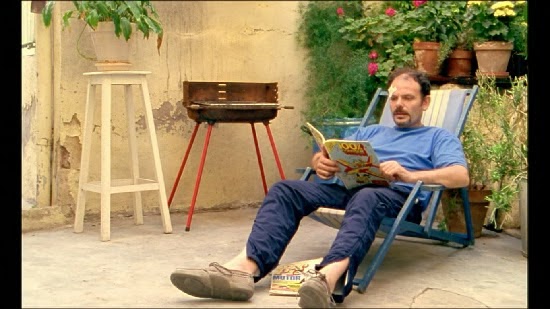
To be authentic, a film does not necessarily have to be an accurate reproduction of real life but rely on its creators’ own perception of life and avoid cliché whenever possible, or at the very least try and turn cliché into something bearing one’s own mark. The latter is what “Manic” does not succeed at doing, in spite of all-too noticeable efforts.

Tuesday, April 8, 2014

"Wanda"


Towards the end of “Wanda”, a soldier picking up the titular character in a bar observes: “You don’t have to say nothin’. I’m talkin’ and talkin’ and talkin’ and you just sittin’ there.”

That is an accurate summary of Wanda as a character, cruel as it may be, and one of the many things that make her and the film so special. In today’s contemporary screenwriting doctrine, where the protagonist has to have a clearly established goal, know what it is and why they want to obtain it, Wanda Goronski (writer-director Barbara Loden) is a refreshing anomaly. Passive to the point of apathy, barely saying more than a few words, rarely taking any action of her own volition and constantly the object of external forces’ actions, Wanda does not appear to have any desires or goals but the more problematic truth is that she simply does not know what she wants and thus cannot do much of anything.


The film’s opening fifteen minutes are like a challenge towards the audience. In most films, you will at least get some basic information of who the protagonist is, what they want and why they want it. That information will almost invariably be provided by actions and words, as convention holds that it is through these two things that we define ourselves. By contrast, Wanda Goronski is consistently defined by her inaction: She wakes up on a sofa, surrounded by screaming babies in diapers, all of whom are taken care of by the first young woman to appear in the film. Before Wanda emerges from underneath her sheet, we initially assume the aforementioned character to be her but it is quickly apparent that it is in fact her sister. Waking up is the only substantial action Wanda actually commits in this scene. We do not see her help her sister and brother-in-law with the babies nor interact with her family in any way. In her next scene, we see her ask money from an old anthracite worker. He complains but gives some to her nonetheless.


Afterwards, we see a man in court with children. We learn that this is Wanda’s husband, that the children are hers and that they are finalizing their divorce. Wanda is defined this time not only by her inaction but also by her absence, as she is late. When she finally arrives, she does not even cast one glance at her children, avoids her husband’s gaze and when confronted by the judge with the claim that she deserted him and their children, she has nothing to say. The distant framing, which progresses from full-body to midriff as she gets closer to the mostly off-screen judge’s stand, completely depersonalizes her and denies the audience any emotional cues the way close-ups or alternating points of view might. The only emotions she conveys, and even then quite reservedly, are discomfort and impatience. Parting with her husband and children appears to be no bigger a deal to her than if she were selling some of her jewelry in a pawnshop.


Having separated from her family and lost her job in a similarly matter-of-fact manner, Wanda is balanced from man to man, used and tossed aside with as little care as she displays towards herself or anything. She looks at window displays of clothes she’ll never be able to afford, watches an Italian film in a mostly-empty film theatre only to have the contents of her purse stolen off-screen, and finally stumbles into a tavern. At this point, it’s obvious why Loden chose to give her character that particular name.


This is where the bare bones of a plot start working: The place contains only one man, standing nervously behind the bar and clearly annoyed with her presence. He insists they’re closed but allows her to go to the toilet. After wetting her face, she comes out asking for a towel. The man looks down, the camera follows his gaze and, in one of the film’s many instances of dark humour, we see the real bartender lying unconscious on the floor with a towel in his mouth. The other man, Norman Dennis (Michael Higgins) is exposed as a robber.


From this point on, the film takes a curious and unexpected turn as Wanda and Mr. Dennis begin what can be technically described as a relationship, but without a single hint of affection or sexual chemistry to be found between them. Although they share a hotel bed and their state of undress clearly indicates sexual activity has taken place, their exchanges with each other remain as awkward and uncomfortable as they were when Wanda unexpectedly caught him mid-robbery, only now with additional psychological abuse. Frightened, frustrated and ignorant of how to properly cope with his situation, Mr. Dennis desperately clings to what little grasp he has over the situation by treating Wanda like a slave, ordering her to get burgers but forgetting to immediately give her money to do so, snapping at her for forgetting that he didn’t want onions in his and forcing her to remove them from it. But this mistreatment rather than making Mr. Dennis a villain in order to create an instinctive emotional response from the viewer and allow them to make an easy distinction between abuser and victim only further exposes their common disarray.

The film essentially adopts a “lovers-on-the-run” plot that became popular in the 1970s after Arthur Penn’s groundbreaking 1967 “Bonnie And Clyde”. But much like John Cassavetes did with the gangster-noir in his 1976 film “The Killing Of A Chinese Bookie”, Barbara Loden only keeps the skeletal structure after having stripped it of everything that made “Bonnie And Clyde” exciting and romantic. Bonnie and Clyde may have been immature adult-children, but audiences were still encouraged to like them and identify with them as tragic victims. Wanda and Mr. Dennis, by contrast, are as unexciting and uncharismatic as regular people can be. Indeed, were Mr. Dennis more intelligent and self-confident, he might use his “normality” to be a more successful criminal, as he looks less like a thug and more like an accountant. Everything about the film is deliberately anti-dramatic, from the characters’ lack of charisma and decisiveness to the slow and lengthy panning shots and minimal, mundane dialogue.


And throughout most of the film, Wanda remains passively at the service of other characters. It is quite telling that the only action she took that resulted in a major turn of events was walking in the wrong bar and the wrong time. She’s almost like an Alfred Hitchcock protagonist, except even they quickly regain control of their lives and, more importantly, make it their priority to do so. It is only at the very end that Wanda makes a first step towards self-agency, after a poorly thought-out bank robbery liberates her from Mr. Dennis’s grip. The soldier mentioned at the beginning of the review picks her up and sexually assaults her in his car. Initially offering no resistance as he conceals her from the shot with his body, she suddenly starts screaming and fighting him off. Running away from his car, she collapses in the woods and sobs. The final scene – set in a music bar, surrounded by friends of a woman who noticed her alone in front of her house – appears to negate this development by Wanda’s lack of action, but her friendly, musical surroundings (in a film otherwise devoid of music) provide at least a glimpse of hope for her future.


Before making this film in 1970, Barbara Loden had acted in a few films by her husband Elia Kazan and modelled for magazines, but was otherwise a relative unknown in comparison to fellow actor-turned-independent filmmaker John Cassavetes. It is perhaps that lack of prestige that enabled her to cast herself in the lead role without glamorizing herself in the slightest, something that many good actors-turned-directors have great trouble doing, even in good performances such as Clint Eastwood in his 1992 masterpiece “Unforgiven” or Mel Gibson in his otherwise mediocre 1993 debut “The Man Without A Face”. Delivering little emotion, completely lacking in any self-consciousness and always seeming barely aware of the presence of her own camera, Barbara Loden’s performance is the reflection of the rest of her film: Personal, humble, sincere, original and setting an example that many filmmakers ought to follow.

Monday, April 7, 2014

"The Judge And The Assassin"


After his first feature-length film “The Clockmaker Of Saint-Paul”, Bertrand Tavernier attempted once more to portray violent crime as a reflection of contemporary political turmoil in his 1976 film “The Judge And The Assassin”. But whereas “The Clockmaker Of Saint-Paul” succeeded by remaining doggedly anti-dramatic, respecting its characters and keeping politics as a noticeable yet fairly discreet background element, “The Judge And The Assassin” takes an almost exactly contrary approach, sacrificing its chances of any genuine understanding of what the two titular characters represent in the historical context of late-19th century France by depicting the latter as a tragic victim of a combination of sexual abuse, insanity, poor understanding of how to treat the latter and political machinations, and the former as a pompous egotistical buffoon interested only in boosting his career and responsible for the aforementioned machinations to that end.


The film is based on the case of Joseph Vacher (Michel Galabru) – renamed Bouvier in the film, a serial killer and rapist whose spree across the French countryside from around 1894 to 1897 coincided with rising political tensions concerning both the rise of leftist social movements and the Dreyfus Affair, all of which seemed to threaten to push France on the brink of civil war. Add in Vacher’s birth in 1869 and the fact that both crises arose as consequences of dramatic events from 1870-1871 – the Franco-Prussian war and the Commune de Paris respectively – and the temptation to draw parallels between Vacher’s crimes and the state of the nation becomes irresistible. However, such an approach requires both psychological and political insight. Tavernier and co-screenwriters Jean Aurenche and Pierre Bost get the former mostly right, but it contrasts glaringly with the lamentably shallow satire with which they depict Judge Emile Fourquet (Philippe Noiret) – renamed Rousseau – and his efforts at social climbing and proving Bouvier sane in order to have him executed. From atop their privileged positions as inhabitants of a more modern, enlightened era, they sneer at the anti-Semitism, ignorance and snobbery of the 19th century French bourgeoisie, but make no attempts to look any deeper. In that respect, it’s not unlike Michel Hazanavicius’s skewering of post-WWII French colonial arrogance and then-socially acceptable prejudice in the hilarious “OSS 117” duology except that those films never made any pretense of having anything more profound to say.

This facile attitude is best represented by the character of prosecutor Villedieu (Jean-Claude Brialy), Fourquet’s cynical friend who, aside from openly admitting to have adopted anti-Semitic attitudes because of their fashionable nature and approval by the Church rather than out of personal conviction, also uses a young southeast-Asian man as a manservant and, it is implied, as a sex slave. His cynicism recalls Jean Rochefort’s scheming atheistic would-be Archbishop Dubois in “Let Joy Reign Supreme”, but unlike Dubois, it is less an actual character trait and more of an indictment of French colonial exploitation that lacks anything more to say about the subject.

 
This would be less of a problem if the scenes concerning Bouvier weren’t so seriously done, and if Michel Galabru’s portrayal of the man wasn’t so spot-on. Galabru’s long career has mostly consisted of supporting roles, often in bad French comedies such as the bafflingly popular “Gendarme” franchise. In Bouvier, however, he found a part that perhaps only he could play so uniquely. Over the top but never too much, never making any attempt at being frightening and never reducing his tragicomic character to a caricature the way Noiret does to Rousseau, Galabru succeeds in making Bouvier pitiable in his self-loathing and admirable in his self-positioning as an “anarchist of God”, defiantly ordering his guards around on the way to his execution as if he were the one leading them on a military parade. It is unfortunate that his performance is so out of synch with the rest of the film.


The Judge And The Assassin” ends on a jarringly preachy note that accurately sums up Tavernier and his team’s lack of respect for both the characters and the audience. After Bouvier’s execution, Fourquet’s working-class mistress (an underused Isabelle Huppert) leads strikers at her silk factory into a “Commune” song as gendarmes prepare to shoot them. Just before they do so, the camera freezes for a few seconds on the workers’ children, the last of which is accompanied by a text summarizing the number of teenagers and children Bouvier raped and killed, comparing it to the far greater number of children who died in factories during the same period. Comparisons to Charlie Chaplin’s “Monsieur Verdoux” are inevitable at that point: That film ended with the titular character – inspired by fellow French serial killer Désiré Landru – drawing a parallel between his murders and the deaths of thousands of soldiers in the then-ongoing First World War, and calling himself an amateur in comparison to the politicians and military leaders behind it; another fictionalized juxtaposition of legal and illegal murder.


What made Chaplin’s film work was precisely the opposite of what makes Tavernier’s film fail: Tonal coherence and a small dose of humility in lieu of self-righteous sanctimony. If Tavernier wanted to make a dark satire of 19th century French society’s treatment of the mentally ill and fear of “the other”, he and his writers shouldn’t have put so much effort into making Bouvier sympathetic. When seen in the broader context, his actions alone would have sufficed as the symptom of a great illness within the country’s culture.

Tuesday, April 1, 2014

"Marius And Jeannette"


At the heart of “Marius And Jeannette” lies a potential for profundity in the use of its enclosed setting – that of a small court of houses in a poor working-class area of Marseille – and the recurrence of the idea of someone going away from it never to come back. The characters exist as a tight-knit community that defines their ways of seeing life, and they seem intolerant of any notion of escaping from the closed space they live in.

Alas, writer-director Robert Guédiguian never dares to venture forth into the thematic goldmine it has opened for itself, preferring instead to fall back on lazy, safe clichés of one big happy family whose life is full of laughter and happiness, occasionally interrupted by bursts of quarreling but never to the point that anyone gets truly hurt for very long. Nobody ever has to re-examine the way they think their lives because they know before the film is even over that everything will be alright in the end.


Jeannette (Ariane Ascaride) is a brash, opinionated single mother of two children struggling to make a living as a harried supermarket cashier, whom watchman Marius (Gérard Meylan) catches stealing two cans of paint from an abandoned cement factory. The film’s major shortcoming – that of the characters’ artificiality – is immediately present from that first scene: Everything about the situation, from Jeannette’s exaggerated protests – “Good thing I’m not an Arab or you’d have shot me!” – to the lazy framing, feels as staged as a street performance of Marcel Pagnol’s greatest hits. While Guédiguian’s direction does get better as the two meet again and their relationship progresses, he never does take full advantage of his characters’ confinement to link it with their problems.


The first person to introduce the fear of leaving this place never to return is Jeannette. After unceremoniously kicking him out of her house due to his refusal to say what he wanted from her, she visits him on his worksite as a peace offering and explains that her two children, a white teenage daughter named Magali (Laëtitia Pesenti) and an Arab Muslim son named Malek (Miloud Nacer), come from two different fathers. Magali’s father abandoned them, Malek’s father died in an accident on the construction site he worked at – much like her own father. The idea is entertained further by Magali when she expresses her desire to study journalism in Paris, and compounded later by a drunk Marius when, after revealing the death of his former wife and children as the reason for his increasing malaise with Jeannette and her children, he muses that after a while, once your children leave for school, you start wondering if you’ll ever see them again.


Unfortunately, by that point, it is already too late to rescue the film from its own trite conformism. Marius’s inner struggles, efficiently conveyed by Gérard Meylan, are drowned by unnecessary subplots involving the neighbours. The subplot involving Monique (Frédérique Bonnal) berating her husband Dédé (Jean-Pierre Daroussin) for his lack of involvement in union protests and for having once voted for the right-wing National Front suggests Guédiguian to be less in touch with his character’s background than he’d like his audience to believe, as the FN is currently the first working-class party of France in terms of voters. This is made even more awkward by his ending narration’s dedication of the film to the working class people of Marseille.


Malek’s dual identity crisis – he fasts for Ramadan against his mother’s wishes and does not understand why his mother is Catholic but his father was a Muslim – could have made for an interesting story in the hands of a perceptive writer. Suffocated by his own desire to make his characters be as likeable and suffer as little as possible, Guédiguian can only come up with trite platitudes about all religions being fundamentally alike and God not caring about whether or not you fast or have sex, delivered by resident atheist intellectual Justin (Jacques Boudet) as what are clearly intended to be pearls of wisdom. These scenes go nowhere and achieve nothing but unintentional comedy in the narrator’s epilogue at the end revealing that Malek’s later study of the Quran in its original Arabic confirmed what Justin told him. Unless Malek’s reading were to be strongly influenced by both Justin’s inanities and the communist ideals of his ex-POW lover Caroline (Pascale Roberts), such a conclusion would be highly unlikely at best.
There is undeniable chemistry between Ariane Ascaride and Gérard Meylan, and the conflict born from the different experience each has had with loss could have given birth to something beautiful, provided Guédiguian would have chosen to focus on them and pay closer attention to the way they communicate and don’t communicate their innermost feelings, fears and desires. Had he abandoned all pretenses at making a French left-wing populist film the likes of which Julien Duvivier or Jean Renoir used to make so masterfully in the 1930s, “Marius And Jeannette” could have been a fresh and truthful experience. As it stands, it only offers childish banalities with occasional moments of truth squeezed in here and there.

Monday, March 17, 2014

"Weekend" (2011)


Andrew Haigh’s « Weekend » is one of the most beautiful and compelling love stories I have ever had the privilege to watch, a film possessed in every frame by the most important quality that defines a film and indeed every work of art and entertainment: Sincerity. This quality is particularly welcome in a film centered on a relationship that is built by it; by the feelings the two lovers bring out in each other, and the protagonist’s subsequent attitude towards his sexuality.

Russell (Tom Cullen) is a sensitive young gay man who lives alone in his apartment. He is first seen attending a party at his best friend’s house along with friends and family. While he appears to fit in and gets along well with them, the lack of spatialization due to the closeness of shots and length of the focal suggest he does not feel completely at home. His friends lead the conversations for the entirety of the scene. Their dialogue itself does not reveal anything important about them, but Russell's reactions to themconvey just enough for us to know of his discontent.  However, it is not until he leaves and goes into a nightclub, where a similarly-aged young man catches his eye, that the information of his homosexuality is communicated to the audience.


After a cat-and-mouse game in and out of the toilets, Russell takes him home and spends the night with him. The following morning, we learn that the man’s name is Glen (Chris New). After some post-coital small talk, Glen admits that their tryst was part of an artistic project he’s working on. With a tape recorder, he asks Russell – challenges would be a more accurate word – to recall their one-night-stand in as much detail as he can remember, and describe how he felt about it. After some coaxing, Russell agrees.

In a long shot regularly panning from Russell’s face to Glen’s, the viewer bears close witness to the birth of two beautiful characters and the seeds of an equally beautiful relationship. Despite his embarrassment, Russell traces all the steps of their night, contradicting Glen on a few details. This is a rough sketch of what their exchanges will be like: A contradictory mixture of oppositions and discoveries. Glen counters Russell’s self-consciousness with relaxed cockiness and buoyancy. The goal of his project, he explains, is to expose the audience to a frank discussion about gay sex. As he will frequently argue throughout the film, society, in spite of its progress and tolerance, remains doggedly heteronormative and expects gays to conform to its behavioral norms; be gay, but not too gay. Talk about your sexuality, but don’t shove it down our throats like we do to you in every form of art and media.

This conformity is precisely one of Russell’s foremost traits and one of the sources of his lack of self-assurance. While he is out to his best friend Jamie and the latter’s family and friends, he is still reluctant to discuss his feelings openly and be himself for all to see. Whether it’s homophobic insults from passing kids, teenagers making “spot-the-gay-guy” jokes on the bus while blissfully unaware that there’s one right next to them or a coworker graphically boasting about how he can stick four fingers up a woman’s vagina, Russell is constantly reminded of his otherness.


What makes this situation even more difficult for him is the fact that he is an orphan. This status presents him with a major challenge that, quite ironically, many gays would likely find convenient in theory: He never had any parents to come out to. Having grown up in foster homes, Russell feels even more of an outsider than he normally would. How is one supposed to define one’s personal identity without the recognizable group of reference that constitutes a family?

Shot with mostly long-to-middle focals, primarily direct sound and no recognizable actors, “Weekend”’s naturalism immerses the viewer as an invisible observer. Many shots are obscured by the blurry bodies of extras or furniture in the foreground. Initially used to make the audience share Russell’s discomfort and oppression, most notably in the scene with the decidedly heterosexual coworker, this visual attribute gradually ceases to be unnerving as Russell and Glen’s relationship evolves from sexual and intellectual attraction into genuine tenderness.


This evolution reaches a pinnacle during a long sequence in Russell’s apartment on the night before Glen has to leave for America. Fuelled by cocaine, poppers and hints about Glen’s past romantic life dropped at a previous party, Russell and Glen confront each other on their personal attitudes towards their sexuality and themselves in general. Through their fights, personal truths break out. Russell calls out Glen on what he feels is the incompatibility between his denunciation of inequality and his dismissal of commitment. From his journal, he recalls an encounter with a married man and the sense of shame and guilt as he thought about him going home to his wife and kissing his children goodnight. It becomes clear that Glen has come to represent both an ideal of sexual comfort as well as a hopeful anchor to a life of stability and happiness. Glen’s mask of opinionated cynicism comes down, but not without a fight.


Thus, love appears in “Weekend” as a battlefield in which victory is achieved by both parties when they build their relationship with remaining pieces picked up after each attack. It is a complicated, maddening thing, yet entirely worthwhile for the improvement it creates within each lover. While my own relationship with my wonderful girlfriend Deanna is fortunately free of such emotional violence, I nevertheless recognized the truth of Russell and Glen’s love for each other in the unflinching honesty they bring out of each other.

As Russell, Tom Cullen gives the impression of constantly wading through an inner minefield in his quest for purpose and self-acceptance. It’s a superbly understated performance, one of the best seen in 2011. However, the actor whose presence endures the most, long after the film’s conclusion, is Chris New, an aptly-named actor with the face of a shorter Kevin Durand, the voice of a younger Jude Law and raw natural talent that evokes the great Tom Hardy. Doubtless many actors would have tried to make Glen likeable in spite of his smugness and devil-may-care attitude. Not many would have imbued him with the soul Chris New brings to him, and even fewer would have had the courage to dare the audience to accept him as he is.


For all the preceding paragraphs, I still feel I have not done enough justice to “Weekend”’s power and splendor. It should be experienced by all who have ever experienced a relationship – long-term or short-term as in the film’s case – that fundamentally changed them as human beings. While the gay condition is a prominent and recurring theme within the film, it is not what defines it. As in real life, the characters’ humanity far supersedes their sexuality.